By Michael Kuttner…
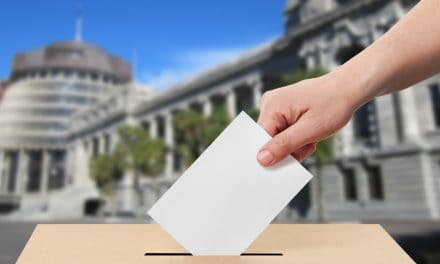
Polling stations throughout Israel open at 7am and close at 10pm.
This gives enough time for early voters and those who procrastinate to exercise their democratic rights.
Officially, Election Day is a public holiday. Depending on the time of year, if the weather is pleasant, beaches are a popular place for families to enjoy and picnic areas are filled with thousands barbecuing meals.
Malls do a very profitable business and election “specials” abound.
Voting takes place in a myriad of locations. With students on holiday schools are a natural choice as well as other public and community sites.
Despite the prevalence of social media in today’s society the plague of large posters extolling the virtues of each and every political party and politician appear. They are erected along motorways and in almost every city, town and village. Political rivals tear them down overnight and replace them with alternative material.
Remnants of paper, cardboard and other material cause environmental pollution which the country can do well without. One wonders exactly how much influence these old fashioned hoardings actually achieve. Who even bothers to read them and how many minds do they really change?
This time around there has been no intelligent or meaningful exchange of ideas between the parties. There have been few serious expositions of policies whether social or economic. There was not one televised debate between the leaders of the main contenders.
There had been plenty of negative mud slinging and barrel loads of doomsday predictions as to what may follow if the results do not pan out according to the desires of the protagonists concerned.
Foreign media outlets and commentators have had a field day pontificating about the election. Most of them are completely ignorant of the real situation and merely follow the biases of their editors and particular political messages they are paid to peddle.
The usual knee jerks of anti Israel/Zionist “experts” abound and contribute their jaundiced offerings.
Some Israeli ex pats now living in Diaspora exile bewail the terrible situation in their former homeland. Having “escaped” from what they believe to be an irredeemably lost country they now reside in nations where the hatred of Jews is endemic and their long term safety doubtful.
Some who have made their fortune in other countries feel that this gives them the right to tell the unenlightened “natives” who they ought to be supporting or avoiding on election day.
Israeli elections are never short of drama of one sort or another.
They have in the past been accompanied by an upsurge in terror related events and attempts to cause mayhem. For that reason security leading up to polling day and on the day itself is heightened.
This year we had the added possibility of Iran or its proxies attempting to disrupt proceedings. As usual wild plots and scenarios were being circulated all of which added to tensions.
What are the timelines as Israel embarks on this exercise in democracy?
Under Israel’s election law, campaign broadcasts are only allowed to air in the 21 days immediately preceding the election.
Before this, parties typically run ads on social media platforms such as YouTube, X/Twitter, and Instagram. However, these ads are paid for by individual campaigns and may not be shown on Israeli TV or radio outside of the allotted three weeks.
Trains and buses run according to a pre arranged schedule and offer free transport to citizens needing to travel inter city in order to vote at their designated polling station.
You need to provide proof of eligibility to vote and have your name cross checked by the election officials concerned.
At many polling booths across the country there are exit polls where voters can secretly deposit another vote. These are used as a guide once the polls close at 10pm for the media to declare trends and possible results.
The whole country is glued to their TV, computer or smart phone in order to see and hear what the pundits predict after the 10pm deadline.
On 4 November the official results will be confirmed.
Once the results are made public, appeals can be submitted until 18 November. An appeal can be submitted by any member of the Central Elections Committee or a Regional Elections Committee, any party represented in the outgoing Knesset, any individual MK, any approved candidate or candidate list that participated in the election – even those that failed to cross the electoral threshold – and the attorney-general.
It is exceptionally rare for successful appeals to alter Knesset election results.
As citizens line up to vote a very interesting statistic has been published.
First time voters were recently surveyed and asked whether they intend to cast their ballot. These 18 to 22 year olds provided an astounding response. A staggering 80% to 95% said that they would be voting. Compare this to the same age group in the last USA Presidential election when only 47% in this age group actually cast their ballots. Compare it also to only 53% of the same age range who have registered to vote in the NZ elections.
Despite the doomsday soothsayers the fact that young voters are keen to be involved is a positive sign of national identity and involvement.
Turnout on the day exceeded all recent records with 78% eligible voters casting their ballots. The IDF votes reached 80% which is also a record. When you compare voter percentages in the UK (60%), USA (64%) and France (67%), Israelis’ participation shows a healthy involvement in the democratic process. Unlike Australia where citizens are compelled by law to turn up at the polling booth, voting in Israel is voluntary and carries no penalty for abstaining.
The 10pm deadline always produces media drama as all the news channels display their exit poll predictions. These vary according to the political bias of the channel. They generate immense hype but are not necessarily indicative of the official results which are counted, tabulated, checked and published over subsequent days.
This time they accurately forecast a potential deadlock between the two political blocs and an impressive increase in turnout and result for the Arab parties. Needless to say both Netanyahu and Eisenkot claimed victory. Likud however remains the largest party. The leader of the ex Labour – ex Meretz parties, now renamed the Democrats, claimed a glorious victory. However as the remnants of what was once the predominant socialist left are only likely to garner 8 mandates this burst of verbal pomposity can be ignored.
The Arab parties flush with their unexpected surge in support, celebrated by singing the Palestinian national anthem and thus demonstrated their antithesis towards the Jewish State they claim to represent. The only Zionist leader who believes they are valid coalition partners is the head of the Democrats, the small rump of leftist Oslo disaster supporters.
Suspicions have surfaced of possible Qatari and Turkish attempts to illegally influence Arab voters. These allegations are being investigated and could have a bearing on the final results.
The bottom line is that neither the current coalition nor the aspiring replacement bloc has the numbers to reach 61 mandates thus commanding a Knesset majority.
If Netanyahu is serious about creating a Zionist majority coalition he will have to jettison his Charedi parties whose members disavow any Zionist affiliation.
If Eisenkot avoids embracing Arab parties (which cannot bring themselves to acknowledge Hamas and Hezbollah as terror groups) he likewise will fail to cobble together a majority.
This leaves a unity coalition as the only viable option with or without Netanyahu.
There is always the possibility of defections from one bloc to another or some sort of “deal” nobody has yet thought about.
The one certainty is that tortuous times lie ahead.
Stand by for the impending US midterm tsunami which has the likelihood of negatively impacting Israel and American Jews.
Michael Kuttner is a Jewish New Zealander who for many years was actively involved with various communal organisations connected to Judaism and Israel. He now lives in Israel.
[This article was originally published on J-Wire and is reproduced here with permission from Michael Kuttner.]